Masking at School
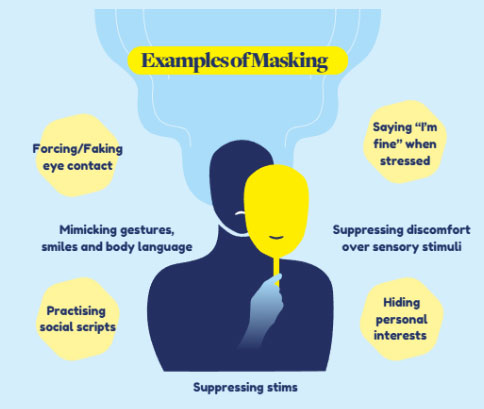
We all make small adjustments to our behaviour from time to time to accommodate varied social situations (e.g. how we act at a formal dinner party may be different to how we act at a casual dinner with friends.) For autistic individuals, however, masking can be much more prolonged and intense, and can take an incredible amount of energy to maintain. If an autistic person is not able to unmask, the toll on their body can become overwhelming.
Did you Know:
Masking can be both a conscious and an unconscious process. Some autistic people are aware they are masking, while for others it may become so automatic over time that they are no longer consciously aware they are doing it. This can make it difficult to recognise their own needs or know when they are becoming overwhelmed.
The Coke Bottle Effect- The Impact of Autistic Masking After School 15
Masking can lead to some common after-school behaviours
- Meltdowns and escalations
- Anger, quick temper
- Mood fluctuations
- Amplified sensory sensitivities
- Withdrawal or disinterest
- Shutdown and disengagement
- Extreme Exhaustion
The Coke Bottle Effect describes what happens when an autistic child has spent the day holding in stress, sensory overload or emotions in order to cope. Throughout the day, small stresses can build up inside, like gentle shaking of a closed bottle. On the outside, the child may seem calm or “fine,” but inside they are working very hard to stay regulated.
When they come home, the sense of safety allows that pressure to release. This release can look like tears, shutdown, withdrawal, needing space, or becoming overwhelmed. It is not a tantrum or misbehaviour. It is the nervous system finally letting go after holding everything in.
The Coke Bottle Effect reminds us to look at what the child has been carrying, not just what we see at the end of the day. The goal is not to stop the release, but to understand why it is happening, reduce the build-up, and support the child to recover.
1. Original ‘Coke Bottle’ analogy from A Different Neurotribe: https://adifferentneurotribe.wordpress.com/2018/04/25/a-day-in-the-life-of-a-child-with-asd-using-the-coke-can-explanation/