The Internalised Autistic Experience
What Do We Mean by an Internalised Autistic Experience?
As we have shared, autistic people experience, process and express the world in different ways. These differences are not fixed traits or “types” and can shift depending on the environment, sensory demands, stress levels, relationships and whether a person feels able to be themselves.
When we talk about an internalised autistic experience, we are not describing a separate type of autism or suggesting that an autistic person’s experiences are entirely internal.
We use this phrase to describe autistic experiences, distress and support needs that may be difficult for other people to recognise. For example, some signs of distress may be clearly visible, while others may be masked, suppressed, delayed or expressed only in certain environments. This is not about two types of autistic people. It is about recognising that some autistic experiences and needs are easier to notice, while others can be harder to see.
Some autistic expressions, signs of distress or support needs may be more visible, for example through movement differences, clear signs of overwhelm, communication differences or noticeable sensory seeking or stimming.
Because these expressions are easier to observe, they have been more commonly recognised within traditional understandings of autism.
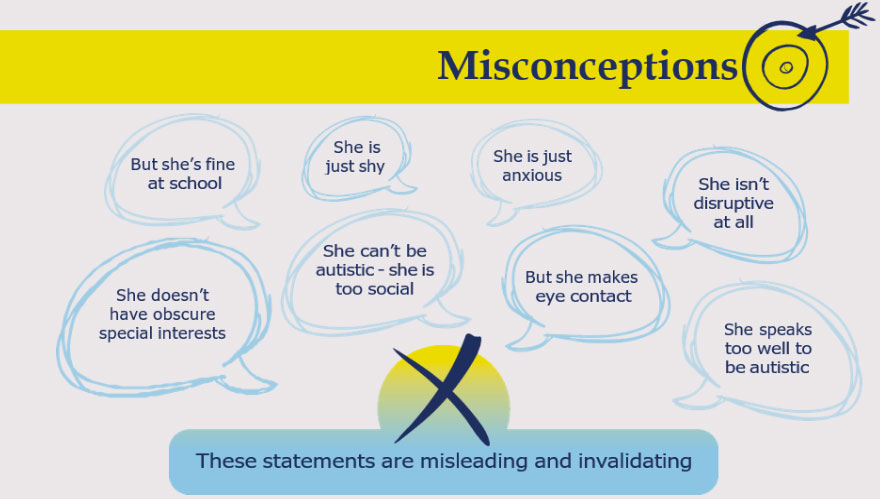
Other experiences and support needs can be harder to recognise. A student may be using considerable energy to manage sensory, emotional, communication, cognitive or social demands while showing few outward signs of what they are experiencing. This might look like becoming quiet, withdrawing, relying on scripts, agreeing automatically, suppressing movement or masking discomfort. The student’s experience is real, but it can be missed when others only look for visible signs.
These less visible experiences can be present in autistic people of any gender. However, autistic girls and gender-diverse students have often been overlooked within traditional understandings of autism.
Many autistic girls and gender-diverse young people grow up with strong social expectations to fit in, be accommodating, appear socially capable or avoid drawing attention to themselves. They may develop internalised coping strategies or mask their autistic needs in environments where there is pressure to appear “fine”. This reflects social expectations, diagnostic bias, misunderstanding and learned survival responses, rather than differences in autism itself.
These patterns are not fixed and can vary across contexts and change over time. A student may mask in one environment and express their needs more openly in another. They may appear to manage throughout the school day and experience exhaustion, distress, shutdown or overwhelm later, when they are in a more familiar environment.
A student’s capacity and support needs may also change across settings, circumstances and time. They may be able to manage an activity one day and need considerable support with the same activity another day. This does not mean their disability is temporary or that their support needs are minor. Capacity may be affected by sensory demands, communication access, health, stress, trauma, burnout, major transitions and how accessible and responsive the environment is.
Because autistic experiences and support needs may be less visible, misunderstood or change across circumstances, we cannot assume that a student is coping based on how they appear or what they have previously been able to do.
Support should not depend on a student reaching crisis point or being able to clearly explain or demonstrate what they need.
Instead, we need to notice patterns over time, stay curious, listen to the student and the people they trust, consider what may be happening beneath the visible behaviour and create environments where needs can be recognised and met without the student having to repeatedly explain, prove or mask their distress.